This Website is Proudly Patient Created and Managed

We bring you up-to-date medical information, sourced exclusively from established medical institutions and government sites. 

Transplant Nation

Liver/Kidney Transplant Support

Get the support and information you need to manage pre and post-transplant life and thrive.

Questions?
Find your transplant answers here

patient handbooks and guides,medication lists,Educational videos,weekly online peer support groups for liver and kidney transplant  recipients ,

and More Below…

TRANSPLANT NATION gratefully welcomes Donor Network West as a partner in developing a
Transplant Caregivers Support  website  

Help us get this up and running with suggestions and feedback at Contact Us


Our Online Zoom Transplant Support Groups

Wednesdays 3pm pt

We Are Your Community!

Join us from San Francisco every Wednesday from 3pm to 4pm. We welcome individuals who have already had a transplant, are considering one, or those who are supporting a loved one through this process. We offer a safe, supportive space, for shared experiences, helpful resources and information.
Join us! Let’s build a robust community together!

Go To The Meeting – > HERE!

thursdays 7pm cst

We Are Your Community!

Join us from Chicago every Thursday from 7pm to 8pm. We welcome individuals who have already had a transplant, are considering one, or those who are supporting a loved one through this process. We offer a safe, supportive space, for shared experiences, helpful resources and information.
Join us! Let’s build a robust community together!

Go To The Meeting – > HERE!

TRANSPLANT NATION women only Mondays 7:30pm et

Gals – We Are Your Community!

Join us fromThe East Coast every Monday from 7:30pm – 8:30pm. We welcome individuals who have already had a transplant, are considering one, or those who are supporting a loved one through this process. We offer a safe, supportive space, for shared experiences, helpful resources and information.
Go to the meeting -> HERE!

ZOOM -> We also welcome the participation of living donors, care givers, and medical staff

How transplant-able is your liver?

UNOS uses the MELD system to calculate your need for a transplant (The Model for End-Stage Liver Disease (MELD) is a calculated formula used to assign priority to most liver transplant candidates.)

The MELD is greatly over-rated and generally misunderstood, esp. by patients. Nonetheless it’s what everybody talks about and so it is here: MELD calculator – Online MELD Calculator

In reality, here’s a list of what your Drs actually look at – you will probably need help to makes sense of all this – very involved – Organ Yield Predictors

Organ procurement organizations

The OPTN is managed by UNOS, and all 56 OPOs use the UNOS proprietary computer system to match and place the organs that they procure.

A map of OPYN/UNOS 56 OPOs in the uSA – Organ Procurement Organizations, or OPOs


Or, find your local, personal, OPO at the list printed here

YOU NEED A WHAT?

An organ transplant!
What does that even mean?

A transplant is a life saving medical miracle of staggering complexity. It requires dedicated teams, community, support and education…

Really? How do I find out more? Do they have a school for that?


Welome to Transplant School

Find the resources to map your transplant journey

First Steps


The Tools you need: 

Patient selected handbooks and guides


From the National Institute of Diabetes and Digestive and Kidney Diseases

 LiverTox® provides information on liver injury attributable to prescription and nonprescription medications and selected herbal and dietary supplements.
Freebook download 

Frequently  Asked Transplant Questions

Liver transplantation is very successful. Most people are able to return to their daily routine within three months after the transplant, and many of them even earlier. Recipients have been known to live a normal life 30 years after the operation. Transplant success depends on a number of variables, including health status at the time of transplant, age and recurrent disease. Transplant recipients also directly contribute to the success of their transplant.
The following comes from m the mother of all things Transplant – https://unos.org/transplant/living-donation/ an excellent place for info and resources: 1. Contact a transplant hospital If you know a person you would like to help through living directed donation, talk to him or her and contact the transplant program where the person is listed. If you would like to be a living non-directed donor, contact a transplant hospital of your choice to find out if they have this type of donation program. Visit the OPTN Member Directory for a complete list of transplant hospitals. When you contact transplant hospital staff, they will typically ask for your consent to begin a basic medical screening. With your consent, the transplant hospital staff will ask you questions about your medical history to find out if you have any conditions that would keep you from being a donor. 2. Have an initial screening This initial screening is typically followed by a blood test to see if you are compatible with the intended transplant candidate. If you are not compatible with that person, you may have other options to donate. These options include paired exchange, blood type incompatible donation or positive crossmatch donation. 3. Get an independent donor advocate Transplant hospitals are required to provide an independent donor advocate (IDA) or IDA team for all potential donors. Your IDA should not be part of the potential transplant recipient’s medical team. The IDA will assist you during the donation process.
Primary liver cancer, or hepatocellular carcinoma (also called hepatoma or HCC) is one of the major reasons for liver transplantation in the United States. Patients with HCC that is detected early enough for transplant are evaluated for liver transplantation similar to other patients, with additional careful evaluation of the extent of tumor. Transplant candidates with HCC are then placed on the liver transplant waiting list. Additional treatments are often needed while the patients wait on transplant. A major advantage of transplantation for HCC is that it results in complete removal of the cirrhotic liver that could harbor additional HCC tumors or develop new tumors in the future. For this reason, the chance of cancer recurrence after treatment is lower in patients who receive a liver transplant compared to patients who receive surgical resection as the curative treatment for HCC.
The best way to find willing donors is to share your story. Begin with family and friends, co-workers and church members. People in your social groups. A member of our transplant team can help you with tips and information you can share with people about living donor transplant for children.
Noncholestatic cirrhosis, including post-necrotic cirrhosis from hepatitis B or C or non-alcoholic steatohepatitis (NASH) Cholestatic liver diseases (ie, primary biliary cirrhosis, secondary biliary cirrhosis, primary sclerosing cholangitis) Biliary atresia Acute hepatic failure, including acutely decompensated Wilson disease Metabolic diseases (ie, alpha-1-antitrypsin deficiency, Wilson disease, tyrosinemia, glycogen storage disorder type I or type IV) Malignant neoplasms or benign tumors (ie, HCC, cholangiocarcinoma, hepatoblastoma, polycystic liver disease, hepatic adenoma) Less common additional diagnoses include the following [1] : Cystic fibrosis Budd-Chiari syndome Total parenteral nutrition/hyperalimentation Neonatal hepatitis Congenital hepatic fibrosis Byler disease Trauma Graft versus host disease

…More FAQs here->>>

Um, what? Oh, that’s right! Medications! All your medications are explanained here->>>

VIDEOS!   VIDEOS!   VIDEOS!
For your edification we have selected these easy to understand videos to help you understand not just your liver, transplantation, and your care, but also your doctors. 

See our video library here: Your Videos

The 4 amigos of TransplantNation tabling at Donor Network West’s 09/14/2024, San Ramon, “Donor Awareness” event.

TransplantNation and Donor Network West event 2024

GIVE HOPE! GIVE LIFE!
Become a donor Today!


Did you know you can donate a kidney or a portion of your liver while still alive?
Yes, you can!
Why not save a life? BE A LIVING DONOR!

For the Children

Children who receive Liver and Kidney Transplant Organs at Chicago’s Lurie Children’s Hospital have a survival rate of more than 95 percent after one year and 90 percent after five years, well above the national average. 

The Pediatric Liver Transplantation Program at Ann & Robert H. Lurie Children’s Hospital of Chicago has one of the largest and most experienced pediatric liver transplant teams in the United States.


Here is a national survey
from the American Society of Transplantation on patients’ unmet needs in immunosuppression after transplant. You’ll get $5 to complete the survey. https://www.myast.org/ast-patient-survey

Dr Nancy Ascher, The worlds first female surgeon to perform a liver transplant is featured in this Netflix documentary segment, The Surgeon’s Cut. She teams with her husband, also a trnasplant sugeon, in the O.R. She is funny and kinda totally amazing! Watch –

programa de trasplante hispano – versión en español 

VIDEO
Our Calling
: Dr. Sandy Feng, Transplant Surgeon, UCSF MedicalCenter

Meet Dr. Sandy Feng, UCSF transplant surgeon.
more @ UCSF
Video Playlists


Northwestern Medicine

Juan Carlos Caicedo, MD, transplant surgeon and founding director of the nation’s first Hispanic Transplant Program

Activism
working for you!


This section is for all patients Handbooks For Health

This section is for Spanish Speakers Chicago Latinos, we are here for you!


Patient selected handbooks and guides


Free book download 

From the National Institute of Diabetes and Digestive and Kidney Diseases

 LiverTox® provides information on liver injury attributable to prescription and nonprescription medications and selected herbal and dietary supplements.

Northwestern Medicine AATAP Transplantation Surgeon Dinee C. Simpson saw a need. She created the Northwestern Medicine African American Transplant Access  Program (AATAP)

Simpson is the first African American female transplant surgeon in Illinois. She is committed to breaking down barriers to transplant care in the African American community through access to education, resources and world-class transplant care.

Watch Dr Simpson in the OR transplanting a kidney – below:


National Nurses United

 with more than 175,000 members nationwide, is the largest union and professional association of registered nurses in U.S. history.

Dr Thomas Starzl


The history and development of today’s transplant procedures

Brilliant and informative, “The Burden of Genius,”(TRAILER)  is a documentary film that focuses on Dr Thomas Starzl , often referred to as “the father of transplantation.” 

Meet the Northwestern Medicine Transplant Team

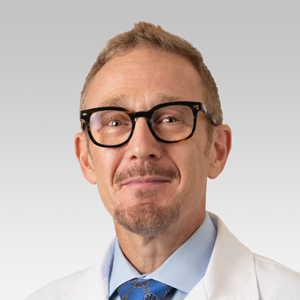
Joseph R. Leventhal, MD

Joseph R. Leventhal, MD

Northwestern Medicine logoNorthwestern Medical Group

Primary Specialty

Transplantation Surgery

Northwestern Medicine Organ Transplantation Center
676 N St Clair St 19th Flr
Chicago IL 60611
Meet the DR

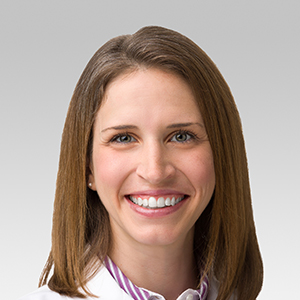
Elizabeth A. Scharle, MD

Elizabeth A. Scharle, MD

4.9   
158 ratings  Read Reviews
Northwestern Medicine logoNorthwestern Medical Group

Primary Specialty

Internal Medicine

Secondary Specialty

Hospital Medicine

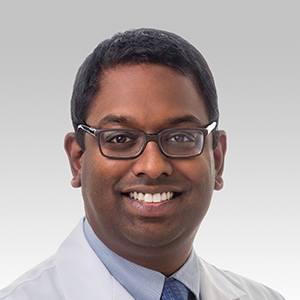
Derrick A. Christopher, MD

Derrick A. Christopher, MD

Northwestern Medicine logoNorthwestern Medical Group

Primary Specialty

Transplantation Surgery

Secondary Specialty

Abdominal Transplantation Surgery

Meet the DR

Juan C. Caicedo Ramirez, MD

Juan C. Caicedo Ramirez, MD Primary Specialty: 
Transplantation Surgery

Read More »

Justin Boike MD

Hepatology & Liver Transplantation

Chicago, IL

Northwestern Memorial Hospital

11 – 20 Yrs Experience

Northwestern University, Chicago, IL

Read More »

Zachary C. Dietch, MD

Primary Specialty:
Transplantation Surgery

Northwestern Medical Group

Assistant Professor,Feinberg School of Medicine

Meet Me »

Dinee C. Simpson, MD

American Board of Surgery – Surgery (Certified)

Associate Professor, Feinberg School of Medicine

Primary Specialty: Transplantation Surgery

Read More »

Daniel R. Ganger, MD

Daniel R. Ganger,
MD Rated 4.9 stars 232 Ratings

Primary Specialty: Transplant Hepatology

Read More »

Laura M. Kulik, MD

Rated 4.9
177 Ratings
 

Primary Specialty: Hepatology

Chadwick V. Milstead, MD
5.0 stars
Northwestern Medicine Primary & Specialty Care
259 E Erie St Ste 2300
Lavin Family Pavilion
Chicago IL 60611
Phone: 312.926.6000Fax: 312.926.6332
He speaks! video here

  
Site by Mr T –  2nd liver transplant, March 28th, 2023

TransplantNation.us © 2023